| The risk | What happens | What can be done about it |
| Infection | Infection in the operation site causing pain, swelling, redness and discharge in 1 in 25 to 1 in 58 people. The wound may break down. | Treatment may be wound dressings, drainage and antibiotics. |
| Collection of fluid under the skin | The operation site under the arm continues to ooze fluid, which collects beneath the cut. | The collection may need to be drained with a needle and syringe. This may need to be repeated several times until the oozing stops. |
| Poor healing | The edges of the wound may lose blood supply and change colour. | Further surgery may be needed to cut out the affected areas along the wound. |
| Numbness and weakness to arms and chest | Weakness and numbness of the arms and chest may happen due to certain nerves being cut during the operation. | This may be temporary or permanent. |
| Shoulder stiffness | Difficulty with arm movement after the operation. | This is usually temporary when treated with physiotherapy and/ or exercises. |
| Poor wound healing | The layers of the wound may not heal well and the wound may burst open. | This may need long term wound care with dressings and antibiotics. |
| The wound may not heal normally | The scar can be thickened and red and may be painful. | This is permanent and can be disfiguring. |
| Swelling of the arm (lymphodoema) | The arm on the side of the operation may swell in 1 in 4 women. This may be caused by removal of the lymph nodes in the armpit. The risks are increased by damage to the arm, taking of blood specimens, infection and weight gain. | The average time between treatment and development of lymphodoema is 20 months but can occur years later.nIt can be treated with a special type of garment, which squeezes the arm to reduce the fluid build-up. Regular massage is also used. |
| The cancernre-grows | Recurrence of tumour in or around the scar can occur. | Further treatment to remove or to destroy the tumours. This may be surgery, chemotherapy or radiotherapy or a combination of all three. |
| Pain after mastectomy | After mastectomy, there may be chronic pain in the area of the surgery. This may happen in 2 out of 3 women in the 30-49 year age group decreasing to 1 in 4 women over the age of 70 years. | The level of pain varies between people. It is usually managed with drugs prescribed by pain specialist |
| | |
| Anxiety and/ or depression after lumpectomy | Feelings of anxiety and depression due to the disease and possible recurrence for every 2 out of 5 women. | Professional counselling both before and after the surgery |
| Anxiety and depression after mastectomy | Feelings of anxiety and depression due to losing a breast for 1 in 3 cases. | Professional counselling both before and after the surgery |
| Loss of interest in sexuality. | Distress at the change in body image or depression due to the disease causes loss of sexuality for 1 in 1:3 women. | Professional counselling both before and after the surgery |
| Increased risk in obese patients | | An increased risk of wound infection, chest infection, heart and lung complications and thrombosis. |
| Increased risk in smokers | An increased risk of wound infection, chest infection, heart and lung complications and thrombosis. | Giving up smoking before the operation will help reduce the risk. |

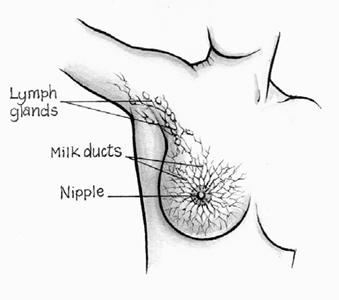 The breast is a glandular tissue (can secrete substances). Around the breast are lymph nodes. These are part of the lymphatic system.